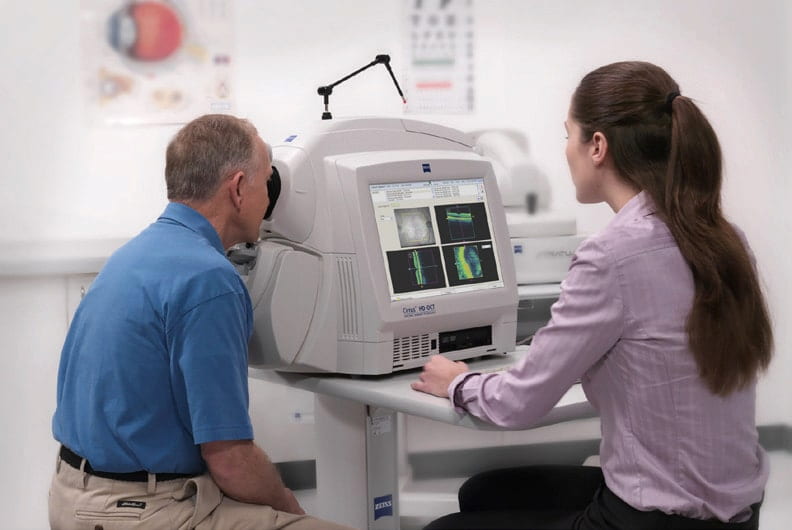
Diabetic retinopathy (DR) is a leading cause of blindness among working-age adults, affecting millions worldwide. The prevalence of DR is alarmingly high, affecting an estimated 34.6 million people globally. In the United States alone, it is estimated that 7.7 million adults have some form of diabetic retinopathy.
How Does Diabetes Affect the Eye?
Most of the damage occurs due to chronically elevated blood sugar. Firstly, high blood sugar damages the lining of blood vessels, making them less flexible and more prone to narrowing. This narrowing increases resistance to blood flow, leading to higher blood pressure.
Secondly, diabetes can affect the kidneys’ ability to regulate fluid and sodium balance in the body. When the kidneys don’t function optimally, excess fluid and sodium can build up, increasing blood volume and, consequently, blood pressure.
Thirdly, diabetes can damage the nervous system, disrupting blood pressure regulation and contributing to hypertension. This elevated blood pressure stresses weakened retinal blood vessels, increasing leakage and bleeding, causing macular swelling (diabetic macular edema) and distorted vision.
Furthermore, oxygen deprivation due to damaged blood vessels leads to retinal ischemia, causing cell death and impaired function. In advanced stages, new, fragile blood vessels (proliferative diabetic retinopathy or PDR) can form, leading to bleeding, scar tissue, and potential retinal detachment. Diabetes also directly affects retinal neurons, further impairing vision.
As you can see, the process is complex and occurs on multiple levels. Tragically, many people with DR experience vision loss or blindness due to late diagnosis and inadequate treatment. This is particularly concerning given that DR is largely preventable with early detection and proper management.
How Can Artificial Intelligence Solve the Problem?
Artificial intelligence (AI) has the potential to revolutionize healthcare, including eye care. AI algorithms can analyze vast amounts of data, such as medical images, to identify patterns and make predictions that may be difficult for humans to discern, or that would take too much time, making mass screenings inefficient.
In the context of DR, the most promising applications involve optical coherence tomography (OCT) based AI-powered systems that can analyze retinal scans to detect the subtlest and earliest signs of the pathology before they become clinically visible.
AI algorithms can analyze these OCT scans to identify subtle changes in the retinal layers, such as thickening or fluid accumulation, which may indicate the presence of DR. They can provide quantitative analysis of DR biomarkers in terms of area and volume, enabling swift detection and localization of pathological changes with uncompromised accuracy.
The adoption of OCT AI for Diabetic Retinopathy screening significantly improves the early detection and management of the disease. Some AI-powered systems also offer color-coded visualization of every DR biomarker, optimizing clinical workflow and making it easier for clinicians to identify and track changes. Moreover, these systems enable progression analysis, objectively monitoring the results of DR treatment by comparing OCT examinations from different visits.
One of the significant advantages of AI in OCT analysis is its ability to standardize diagnostic accuracy. Variability in manual interpretation, often influenced by clinician experience and fatigue, can lead to missed or delayed diagnoses. AI models trained on vast datasets of OCT images can provide consistent, objective evaluations, reducing the risk of oversight. Moreover, these models can prioritize cases based on severity, enabling healthcare providers to address critical cases promptly.
The scalability of AI-powered OCT solutions also enhances accessibility to DR screening, especially in underserved regions. Remote screening programs can leverage AI to interpret OCT scans locally, eliminating the need for highly specialized ophthalmologists on-site. This not only improves early detection rates but also optimizes healthcare resources.
As AI technology continues to evolve, its role in OCT analysis for DR detection is set to expand further. Integrating these tools into routine screening programs can significantly reduce the global burden of DR and improve patient outcomes by enabling timely intervention and personalized care.
Did you find this helpful? Check out our other helpful articles on our website.
Read Also
- Innovative Technologies in Oncology: The Future of Cancer Treatment
 Have you ever wondered how far cancer treatment has come in recent years? Advances in technology are making a real difference in the fight against cancer. Today, more people are living longer and healthier lives after a cancer diagnosis. This is all thanks to new and groundbreaking medical advancements. The future of cancer care looks… Read more: Innovative Technologies in Oncology: The Future of Cancer Treatment
 - Cloud-Based Healthcare Administration Solutions: A Guide for Payers, TPAs, and Provider NetworksHealthcare administration has become too complex for disconnected spreadsheets, aging on-premise applications, and manual handoffs between departments. Organizations need technology that can manage claims, enrollment, billing, provider relationships, and member data as connected parts of the same operation. MCSI – Visova is one example, offering a cloud-native vpaas designed to support HIPAA-compliant healthcare administration. Its… Read more: Cloud-Based Healthcare Administration Solutions: A Guide for Payers, TPAs, and Provider Networks
- How Intelligent Invoice Processing Is Reshaping Healthcare AP WorkflowsWhat happens when healthcare invoice volumes outpace the AP team’s ability to review, validate, and route them, while cost per invoice keeps rising? That gap is pushing finance leaders past basic digitization. Supplier invoices across formats, systems, departments, and approval paths, and holding speed, accuracy, compliance, and visibility together gets harder at scale. Intelligent invoice… Read more: How Intelligent Invoice Processing Is Reshaping Healthcare AP Workflows
- From 1905 to 2026: How German Legacy Manufacturers Power Deutsche Dental Technologien’s SuccessFrom 1905 to 2026: How Busch & Co.’s Legacy Powers Deutsche Dental Technologien’s Success In an era where dental technology advances at breakneck speed, few companies embody the perfect blend of historic craftsmanship and modern business agility quite like Busch & Co. and its strategic partner Deutsche Dental Technologien. What began as a small dental bur factory in… Read more: From 1905 to 2026: How German Legacy Manufacturers Power Deutsche Dental Technologien’s Success
- Why the Future of Healthcare Administration is Cloud-NativeThe operational demands placed on modern healthcare administrators have officially outpaced the capabilities of traditional IT infrastructure. While clinical medicine continues to advance at breakneck speed, the back-office systems required to support it often remain painfully stagnant. Today’s insurers, Third-Party Administrators (TPAs), and provider networks are forced to navigate an avalanche of daily claims, aggressive… Read more: Why the Future of Healthcare Administration is Cloud-Native
- The Digital Overhaul: Why Modern Healthcare Administration Demands Advanced Technology SolutionsLet’s be honest about the current state of healthcare administration: it is staggering under its own complexity. The days of managing patient populations, claims, and provider networks with spreadsheets and disjointed legacy systems are long gone. Today, the sheer volume of data processing required just to keep a healthcare organization afloat is enough to paralyze… Read more: The Digital Overhaul: Why Modern Healthcare Administration Demands Advanced Technology Solutions
- Tech-Enabled Healthcare Innovation in Physical Therapy CarePhysical therapy is changing with the help of new technology. Digital tools are now used to support recovery and improve care. These tools help therapists track progress in a better way. Explore how technology is reshaping physical therapy with innovative digital tools. It highlights smarter recovery and patient outcomes in healthcare. Continue reading to discover… Read more: Tech-Enabled Healthcare Innovation in Physical Therapy Care
- 5 Best Payroll Error Detection Software for Healthcare in 2026Healthcare organizations operate some of the most complex payroll environments in any industry. Hospitals, skilled nursing facilities, rehabilitation centers, physician groups, and home healthcare providers must manage thousands of employees working across different shifts, departments, facilities, and compensation structures. Payroll teams are expected to process this information accurately while complying with labor regulations, organizational policies,… Read more: 5 Best Payroll Error Detection Software for Healthcare in 2026